Digital Workers: AI that works as a team
For years, progress in Artificial Intelligence seemed like a race for the biggest model or the fastest chatbot. Today, the real change is happening in coordination.
We are moving from isolated assistants to AI systems composed of specialised workers who collaborate under intelligent supervision. The real value is no longer in a single powerful AI, but in the organisation of collective effort.
To understand this change, we must stop thinking about traditional software and start focusing on organisational structures.
The digital worker
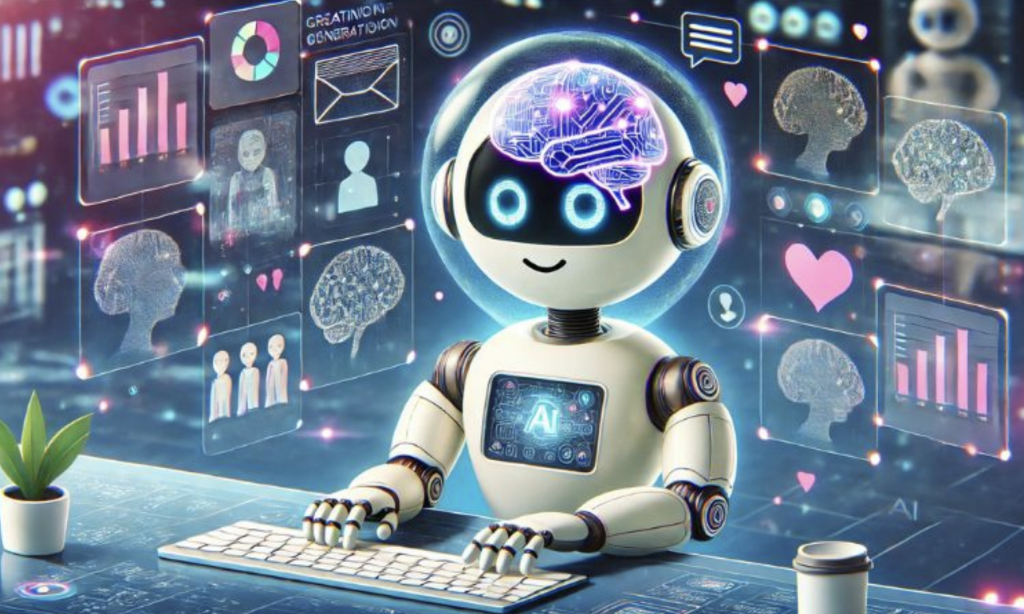
A digital worker is not a generic chatbot. It is an assistant designed to act, with specific skills and a clear objective.
Instead of a single AI that tries to do everything, the system is made up of specialised workers: one for calculations, another for weather, another for managing tasks or drafting messages. Each assistant focuses exclusively on their domain and operates autonomously.
This modular specialisation allows for more accurate, scalable and maintainable systems.
The supervisor
If digital workers are the specialists, the supervisor is the manager. Their role is not to perform tasks, but to orchestrate the work.
When the team receives a complex objective, the supervisor:
- Breaks it down into subtasks.
- Assigns each task to the most suitable agent.
- Coordinates priorities and resolves conflicts.
This approach transforms a generic request into a structured action plan, executed by the specialised team.
Collaboration with memory
One of the great leaps forward compared to traditional automation is shared memory.
Workers no longer work in isolation or forget the context behind each action. They share information, stay synchronised and build corporate intelligence. Knowledge persists and is reused, avoiding silos and unnecessary repetition.
Different styles of orchestration
As in human organisations, there is no single management model:
- Centralised, with a supervisor who makes all the decisions.
- Decentralised, where digital workers collaborate with greater autonomy.
- Hierarchical, combining layers of supervision and execution.
The choice depends on the level of control, resilience and complexity required by the system.
Autonomy with limits
Giving agents autonomy means taking on responsibilities. Orchestration also includes clear rules:
- Precisely defining what data, systems and tools each worker can use, ensuring that they comply with regulatory and normative standards.
- Incorporating human supervision in high-impact or high-risk decisions (human-in-the-loop).
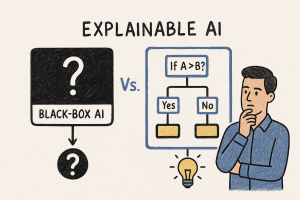
- Implementing continuous traceability to guarantee the transparency of the work carried out.
Without governance, efficiency quickly becomes a risk.
Towards collaborative AI
Orchestration turns isolated AI capabilities into coordinated, goal-oriented systems. In this new stage, success will not depend on having the most intelligent model, but on knowing how to organise collective talent to solve complex problems.
At Nuxia, we believe that the future of AI does not lie in a single artificial mind that does everything, but in teams of digital workers designed to collaborate and support human work.